


Leap of Faith: What Clip 'n Climb Teaches Us About Risk (And Why It Matters Online Too)
By Dan R. | iGaming analyst, 7 years covering payments and player trust online. Tested September 2026.
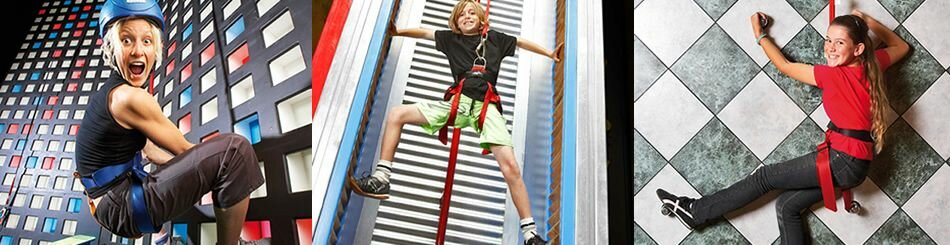
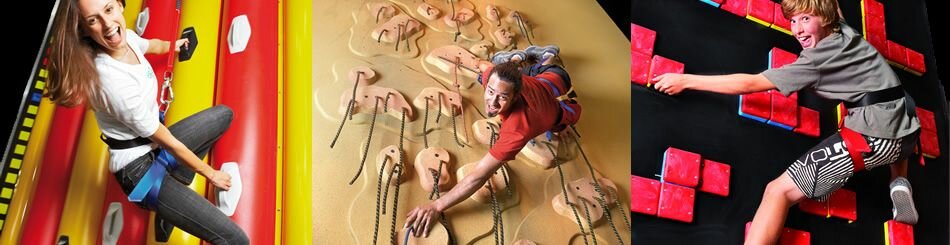
There's a specific ten seconds at Clip 'n Climb Maryport that nobody warns you about properly. You're stood on the platform. The harness is clipped. The instructor has checked it twice, maybe three times if you're anxious about it. And then you have to actually let go.
Not fall. Let go. There's a difference, and anyone who's done the Leap of Faith will tell you the letting go is the hard part, not the landing.
I've watched dozens of kids and a fair few grown adults freeze at that exact moment. Not because the equipment looks unsafe. It doesn't. The ropes are thick, the clips are audibly solid, the staff have done this fitting a hundred times that week alone. The freeze happens because your brain hasn't caught up with what your eyes are telling it. You can see the harness. You can't see the calculation that says it'll hold.
That gap, between what you can verify and what you have to trust anyway, is worth sitting with for a minute. It shows up more places than a climbing wall.
The harness you can see and the one you can't
When you're clipped in for the Leap of Faith, the trust isn't really in the rope in front of you. It's in everything behind it. The auto-belay system that's been serviced on schedule. The staff training that means someone checked your clip before you climbed. The insurance and inspection paperwork you'll never read but that exists precisely so you don't have to.
Most of us have got reasonably good at reading physical risk. We've grown up around ladders, cars, swimming pools. We know what a frayed rope looks like even if we couldn't tell you the tensile strength. But plenty of the trust decisions people make now happen somewhere they've got no inherited instincts for at all, and the shift toward doing things online without the usual paperwork trail is a good example. Some platforms have started stripping out identity checks at the point of sign-up entirely, and a visitor of mine, a regular who does the Leap of Faith every visit and apparently reads a lot on his phone afterwards while his kids queue for Checkerplate, put together his own full review of how that actually works once he'd tried it. His conclusion wasn't "this is safe" or "this is reckless." It was closer to: you're trading one kind of visible check for a different kind of invisible one, and you'd better know which one you're comfortable not seeing.
That's the same trade as the harness, just with different stakes attached.
Why the freeze happens (and why some people don't get it)
Sensation-seeking isn't evenly distributed. Some people queue twice for the Leap of Faith. Others need twenty minutes of talking themselves into it, and a genuine handful decide the Skyscraper is quite enough excitement for one afternoon, thanks very much.
Psychology Today's rundown of sensation-seeking frames it as a fairly stable trait, not a mood. Some brains are wired to chase the novel and the uncertain. Others aren't, and no amount of harness-checking reassures them, because the discomfort was never really about the equipment.
What's interesting is that fear and thrill aren't opposites during something like this. They run in parallel. A qualitative study on fear and thrill in voluntary risk activities found that people doing things like bungee jumps or high ropes courses report both emotions at once, right up until the moment of commitment, and then the fear drops off fast while the thrill lingers. Ask anyone leaving our arena on a Saturday afternoon what the Leap of Faith felt like and you'll get some version of that same arc: dread, then relief, then wanting to do it again immediately.
There's a chemical reason that loop is so compelling. Harvard's Brain Science Initiative has a solid explainer on how dopamine drives risk-seeking and exploration, and it's not really about the reward itself. It's about the anticipation and the uncertainty beforehand. Take the uncertainty away and the whole thing gets a lot less interesting, on a wall or anywhere else.
Removing friction isn't the same as removing risk
Here's where I'll push back on the more breathless takes about frictionless online products, including the account sign-up angle above. Fewer steps at the door doesn't mean fewer consequences on the other side of it. It just moves where the risk sits.
At Clip 'n Climb, the friction is front-loaded. Safety briefing, harness fitting, a proper check before anyone's feet leave the ground. It's slower than it needs to be if all you cared about was speed. It's exactly as slow as it needs to be if you cared about someone getting hurt.
Strip that front-loaded step out of any system, physical or digital, and you haven't made the activity safer. You've just relocated the moment where things can go wrong. A faster sign-up screen for an online account is a genuinely different product decision than a faster harness check, but the underlying logic is identical: somebody decided that speed mattered more than a specific kind of verification, and the person using the product should know that trade happened, even if they'll never see the paperwork behind it.
I'm not going to pretend every visible check is worth keeping and every invisible one is fine. That's not true on a climbing wall either. What I will say is that the people who cope best with any version of this, whether it's letting go of a rope or clicking "confirm" on an account, are the ones who asked what's actually holding them up before they committed. Not after.
Bringing it back to the wall
We've had visitors do the Leap of Faith on their fifth birthday and their fifty-fifth. The thing that changes with age isn't the fear response, it's how quickly people decide the trust is warranted and get on with it. Kids tend to be faster at this than adults, honestly, mostly because they haven't yet learned all the ways things can go wrong.
There's genuine research behind the idea that structured risk-taking, the kind Clip 'n Climb specialises in, actually builds something useful rather than just burning off energy. A study on indoor climbing and well-being published in PLOS One found climbers reporting real gains in resilience and social connection, not just a fun afternoon out. The wall teaches you something about trusting a system you didn't build yourself. That's a transferable skill, even if most people never think to describe it that way.
If you're planning a first visit and want the practical detail sorted before you arrive, our booking information page covers session times and what to expect at the safety briefing. And if you're bringing a group who'll want the full day mapped out rather than just the climbing hour, our guide to active family days out is worth a read before you commit to anything ambitious on a Saturday morning with three tired children in the car.
FAQ
Is the Leap of Faith safe for nervous climbers? Yes. Staff run a full harness check before anyone climbs, and nobody's forced to let go before they're ready. The platform stays available as long as needed. Most first-timers freeze for a few seconds and then go, which is completely normal and part of the challenge.
What age can climb the Leap of Faith unaccompanied? Under our current rules, climbers aged 11 and over can visit and climb without a parent on site. Anyone 10 or younger needs at least one parent present in the building for the full session.
Why do some online platforms skip identity checks at sign-up? Some operators streamline onboarding to reduce drop-off, shifting checks to withdrawal stage instead of deposit stage. It speeds up entry but changes where verification happens, which is worth understanding before committing any funds.
Does removing a safety step always mean more risk? Not necessarily, but it always means the risk moves somewhere else in the process. Whether that's acceptable depends on what replaces the step you removed, and whether you can actually see what that replacement is.
Can I do the Leap of Faith more than once in a visit? Yes, most standard sessions allow repeat climbs on any wall, Leap of Faith included, as time permits within your booked slot. It's consistently one of the most repeated challenges on any given visit.
Gambling involves risk. Please play responsibly and only wager what you can afford to lose. If you feel gambling is becoming a problem, visit BeGambleAware.org or call 1-800-GAMBLER.
Letting go of a rope you've checked twice is one kind of leap. Clicking confirm on a system you've barely looked at is another. Both ask the same question in the end: do you actually know what's holding you up, or are you just hoping it does? Next time you're stood on that platform, harness clipped, staff nodding you on, it's worth remembering that the confidence to let go came from somewhere. Best to make sure it always does.