



The Parent's Survival Guide to Active Family Days Out
There are two kinds of family days out.
The kind where everyone comes home glowing and asks when they can do it again — and the kind that unravels somewhere around midday into snack negotiations, sore feet, and a car journey best not discussed.
Having watched thousands of families come through our doors over the years, we can report that the difference is rarely the venue and rarely the weather. It's preparation — and specifically, the parent's. Kids are remarkably robust. It's the grown-ups who hit the wall, usually at about two o'clock, usually having fed everyone but themselves.
So here's the survival list, written for you rather than for them.
Feed the machine before it breaks
The number one cause of family-day meltdowns isn't tiredness. It's blood sugar.
Pack roughly double the snacks you think reasonable, weighted towards slow-release fuel — bananas, flapjacks, sandwiches, oatcakes — rather than pure sugar rockets that spike and crash inside forty minutes. And schedule food before anyone claims to be hungry. By the time a seven-year-old announces they are starving, you are already in injury time and negotiating from a position of weakness.
The same applies to you. Parents routinely feed everyone else, skip lunch entirely, and then wonder why their patience evaporated at 2 p.m. It isn't a character flaw. It's a blood sugar reading.
Water bottles for every member of the party, filled before you leave. Active children dehydrate fast, they don't reliably notice it, and drinks bought at attractions have a way of costing more than the tickets did.
Dress for participation, not spectating
Here's the mindset shift that changes everything: dress yourself as though you'll be doing the activity — because the best days out are the ones where you join in.
Clothes you can move in. Leave the good coat at home. Layers beat bulk, because activity centres are warm and car parks are not, and a jumper you can tie round your waist beats a coat somebody has to carry.
Footwear you forget about. This is the quiet key to the entire day, and almost nobody plans for it. A parent's day out involves miles of walking, long periods of standing, repeated kneeling to retie small shoes, and the occasional undignified sprint. All of that is impossible in footwear that pinches, and the discomfort shows up as impatience long before it shows up as a complaint.
Comfortable, flexible, easy-on shoes are worth genuine thought. Brands like vibae.com/en-gb build exactly this kind of all-day, slip-on-and-forget footwear — flat, roomy at the toes, leather that wipes clean — and seasoned parents tend to have their own equivalent that they defend fiercely. Whatever you wear, the rules are the same: broken in, roomy at the front, easy to get on and off without sitting down, and nothing you'd mourn if it met a puddle.
A complete spare outfit per child. This isn't optimism, it's statistics. And one adult spare top, too. You know why.
Socks. Many activity centres require them, most children's socks vanish, and cold feet end days early. Two spare pairs in the bag costs nothing.
Plan the energy curve, not just the schedule
Book high-energy activities for the morning, while everyone is fresh, and keep the afternoon deliberately loose.
One anchor activity plus unstructured time beats three back-to-back bookings every single time. Over-scheduling is how a good day turns into a forced march — and children experience a tightly packed itinerary as pressure, not generosity.
Build in a proper sit-down break at the halfway mark. Not a rushed snack standing up; fifteen minutes with everyone off their feet.
And end before everyone is completely empty. This is the most counter-intuitive advice on the list and the most reliable. The last twenty minutes of a day out are the ones everybody remembers, so you want that memory to be "again!" rather than tears in the car park. Leaving while it's still fun feels like cutting the day short. It's actually what makes them ask to come back.
Age by age, what actually works
The same day out needs different handling depending on who's in the back of the car.
Toddlers and pre-schoolers. Two hours is a full day. Expect to carry someone, expect a nap on the way home, and lower the ambition to a single activity plus food. The success metric is that nobody cried in the car park, and that's a legitimate win.
Ages four to seven. The sweet spot for activity days — enthusiastic, physically capable, still delighted by everything. Watch for the sudden energy cliff, which arrives without warning at around the three-hour mark. Snacks buy you about twenty minutes of it.
Ages eight to twelve. Now they want to be good at something, not just do it. Anything with visible progress — a harder wall, a faster time, a level completed — lands far better than a general "have fun". Give them a challenge to beat and step back.
Teenagers. The trick is autonomy, not enthusiasm. Let them choose the activity, let them bring a friend, and accept the performance of reluctance right up until the moment they're competing furiously and enjoying themselves. Do not comment on the transition. It will end it.
Mixed ages. The hardest case, and the answer is usually to split. Two adults, two groups, reconvene for food. A day where everyone does the same compromise activity often means nobody does the thing they wanted.
The three-hour rule
Most families over-plan by about double.
A genuinely good active day out is around three hours of activity, plus a proper meal, plus travel. That's a full day for everyone under about ten and a satisfying one for everyone over. Adding a second venue to "make the most of the drive" is how the wheels come off — you swap a day everyone remembers fondly for a day everyone remembers as long.
If you have the whole day and energy left over, the best use of it is almost always unstructured: a park, a beach, a café, a wander. Children need decompression time after high-stimulation activity, and so, though they'd rarely admit it, do parents.
The bit before you leave the house
Half of a bad day out is decided before anyone gets in the car.
Do the admin the night before. Bags packed, tickets found, clothes out, snacks made. A morning spent hunting for one shoe sets a tone that lasts until lunchtime, and children read stress with unnerving accuracy.
Tell them the plan. Not a full itinerary — just what's happening, roughly how long, and what comes after. Most day-out anxiety in younger children is uncertainty, and it comes out as resistance at the front door rather than as a question.
Leave earlier than you need to. The single biggest predictor of a fraught morning is a departure that's already ten minutes late. Buffer time isn't wasted; it's the thing that stops a small delay becoming a shouted one.
Eat before you go. Not instead of the snacks — as well as. Nobody has ever regretted leaving the house fed.
And set one expectation out loud in the car. Whether that's the gift shop answer, the leaving time, or the fact that everyone tries one thing they haven't done before. Said once, calmly, in advance, it lands. Said for the first time in the middle of the venue, it's a negotiation you'll lose.
Plan B lives in the boot
British family plans need a weather clause.
Keep a standing indoor option within about twenty minutes of your outdoor one — climbing centres, pools, museums, soft play — and decide the switch by nine in the morning rather than mid-drizzle at noon, when everyone else in the county makes the same call and the queue makes the decision for you.
The boot of the car holds the rest of the resilience plan: wellies, a picnic blanket that doubles as a touchline seat, a couple of towels, and one full change of clothes per person.
This matters more on the west Cumbrian coast than most places, where the weather can be doing three different things within twenty miles and the forecast is best treated as a suggestion. Rain cancels remarkably few days out around here. Being unprepared for rain cancels plenty.
The bag that saves the day
Plasters. Wet wipes. Hand sanitiser. A phone power bank. Spare socks — the most underrated item in family logistics. A bag for wet things. Painkillers for you. A small bag of something sugary held in reserve for genuine emergencies rather than routine negotiation.
Total weight: barely a kilo. Value at hour four: incalculable.
Managing the group, not just the logistics
Three situations come up constantly, and all three have the same underlying answer: reduce the audience.
The reluctant child who won't try the thing. Don't persuade in front of the group — that turns a private nerve into a public stand they now have to defend. Let them watch for ten minutes with no commentary. Most come round on their own once nobody's looking.
The competitive sibling who turns everything into a contest. Give them a target that isn't their brother or sister: their own previous time, a personal best, a specific challenge. Competition against yourself is the version that builds something.
The child who wants to do the same thing eleven times. Let them. Repetition is how children build mastery and confidence, and the parent's boredom is not a good enough reason to intervene.
When it goes wrong anyway
Sometimes it does, and the recovery is more useful than the prevention.
Get out of the environment. Noise and stimulation make everything worse; ninety seconds outside or in a quiet corner resets more than any amount of reasoning.
Feed, water, warm — check all three before assuming it's behavioural. Most "sudden" meltdowns are one of those three arriving late.
Don't debrief in the moment. Nothing said during a meltdown is retained by anyone, including you.
And let the day end early without treating it as a failure. A short good day beats a long bad one, and children take their reading of how the day went almost entirely from the adults' faces on the way home.
The money conversation
Active days out can get expensive quickly, and a few habits keep them sane.
Book online in advance — nearly always cheaper, and it commits you to a start time, which solves the leaving-the-house problem. Bring your own food and eat before the activity, not after, when everyone is starving and prices stop mattering. Skip the gift shop by deciding the answer before you arrive and saying so in the car, in advance, once.
And check whether the venue does off-peak or term-time pricing. The same day out on a Tuesday morning is often noticeably cheaper and considerably quieter, which is the rare deal where the cheaper option is also the better one.
The real secret
Ask children what they remember about a great day out and it's almost never the venue.
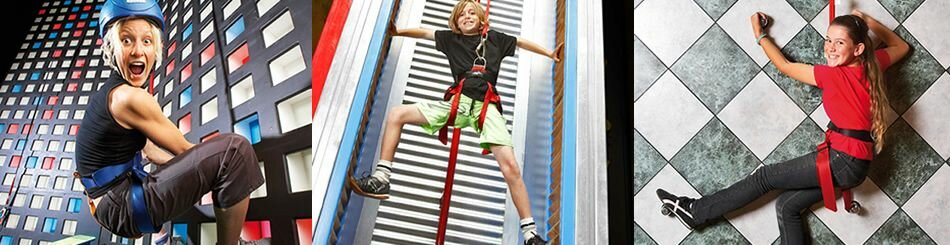
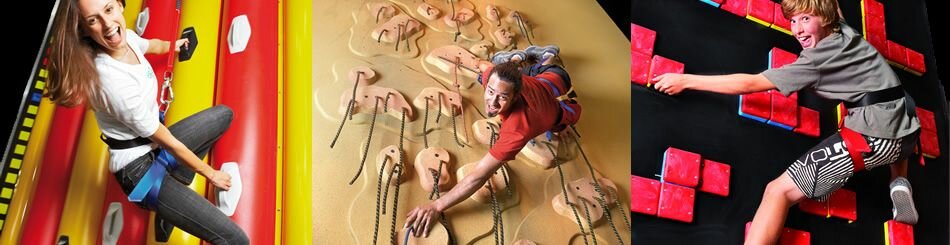
It's that you climbed the wall too. That you joined the race, went down the slide, got wet, were bad at it and laughed anyway. The presence of a parent who is participating rather than supervising from a bench with a phone is, by a distance, the variable that decides how a day is remembered.
Prepare like a professional so you can participate like a kid. That's the whole trick — and it's why the survival list above is really a permission slip.
Sort the logistics. Then go and play.